Pegasus Treatment Center in New Jersey provides a private, upscale environment where clients receive clinically rigorous, personalized care. With a focus on dignity, comfort, and long-term healing, Pegasus Treatment Center supports clients through every stage of their recovery journey.
What Is Dual Diagnosis Treatment?
Unlike traditional addiction treatment, dual diagnosis care provides comprehensive support for both mental health and substance use. Clients benefit from therapies, medications, and support systems that address the full scope of their challenges.
Single diagnosis care focuses on treating either a mental health disorder or a substance use disorder, but not both together. In contrast, dual diagnosis treatment centers utilize a multidisciplinary team of medical and mental health professionals to develop a plan that addresses both conditions at once.
This integrated approach leads to improved outcomes, as untreated mental health symptoms can trigger relapse, and ongoing substance use can worsen mental health. Treating both conditions together provides a stronger foundation for recovery.
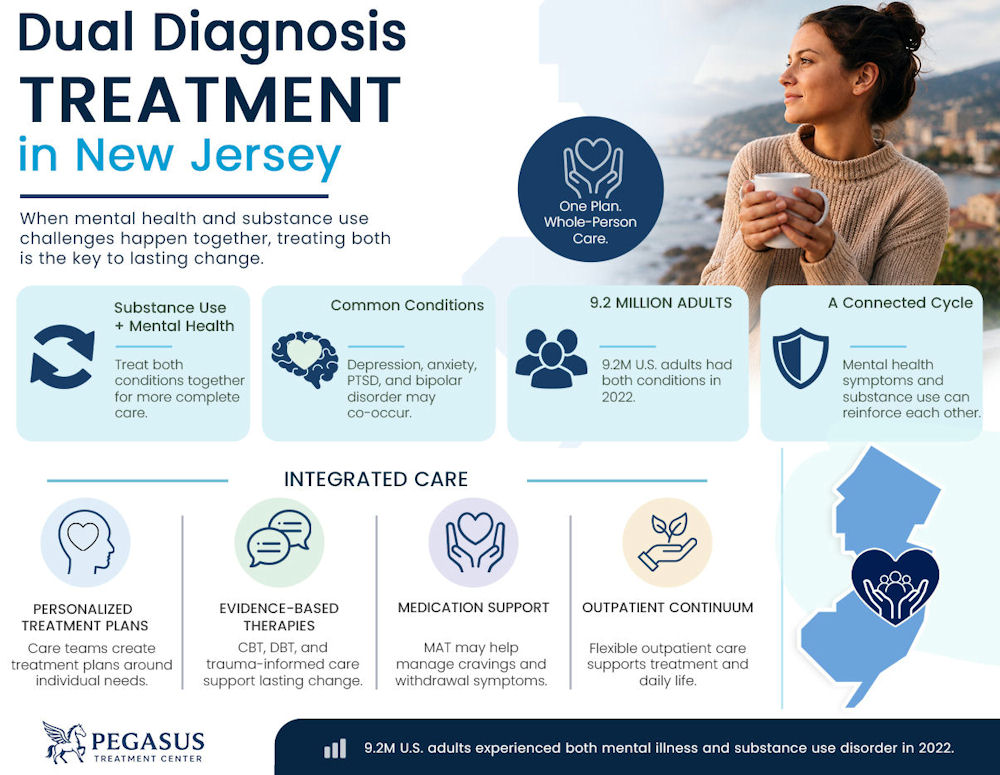
Recent data shows that dual diagnosis is increasingly common. According to the National Institute on Drug Abuse, about 9.2 million adults in the United States had both a mental illness and a substance use disorder in 2022. By 2024, this number continued to rise, highlighting the growing need for specialized dual diagnosis treatment centers.
In New Jersey and nationwide, nearly half of all individuals seeking addiction treatment have co-occurring disorders. These statistics underscore the importance of choosing a treatment center equipped to address both mental health and substance use challenges.
Common Co-Occurring Disorders Treated at Dual Diagnosis Centers
- Depression
- Anxiety disorders
- Bipolar disorder
- Post-traumatic stress disorder (PTSD)
- Attention-deficit/hyperactivity disorder (ADHD)
- Personality disorders
Treating these conditions alongside addiction is essential for successful recovery.
How Substance Use Disorders and Mental Health Conditions Interact
Substance use and mental health disorders often reinforce each other. For example, someone with anxiety may use drugs or alcohol to cope, while substance use can intensify anxiety symptoms. This cycle makes both conditions harder to manage.
Integrated treatment breaks this cycle by addressing underlying causes and teaching coping skills for both mental health and substance use challenges.
Effects of Dual Diagnosis on Daily Life and Relationships
Living with a dual diagnosis can affect every aspect of life. Individuals may struggle at work, in school, or with maintaining healthy relationships. Symptoms like mood swings, withdrawal, or erratic behavior can strain family bonds and friendships.
Without proper treatment, these challenges can lead to isolation, financial difficulties, and worsening health. Dual diagnosis care helps individuals rebuild their lives and relationships by treating both conditions together.
Who Should Consider Dual Diagnosis Treatment?
- Using substances to cope with stress, sadness, or anxiety
- Experiencing mood swings, depression, or panic attacks
- Difficulty managing daily responsibilities
- Withdrawing from friends and family
- Trouble sleeping or changes in appetite
These symptoms are similar to those of other conditions, so it’s important to get a thorough evaluation from an expert before making a diagnosis. Recognizing these symptoms early can help individuals access the right support.
Risk Factors for Developing Dual Diagnosis Conditions
Certain factors increase the risk of developing co-occurring disorders, such as:
- Family history of mental illness or addiction
- Exposure to trauma or chronic stress
- Early substance use
- Untreated mental health symptoms
Understanding these risk factors can help individuals and families seek help before problems escalate.
When to Seek Help from a Dual Diagnosis Treatment Center
If substance use and mental health symptoms are interfering with daily life, it’s time to seek help. Dual diagnosis treatment centers offer specialized care that addresses both issues, improving the chances of lasting recovery.
Early intervention is crucial. The sooner someone receives integrated treatment, the better their outcomes and quality of life.
What To Expect at a Dual Diagnosis Treatment Center
Accurate diagnosis is essential for developing an effective, individualized treatment plan.
Treatment plans at dual diagnosis centers are highly personalized. A team of medical professionals, therapists, and counselors collaborates to address both mental health and substance use disorders.
Plans may include individual therapy, group counseling, medication management, and holistic therapies, all designed to support long-term recovery.
Dual diagnosis treatment centers utilize evidence-based therapies proven to help with both addiction and mental health, such as:
- Cognitive-behavioral therapy (CBT)
- Dialectical behavior therapy (DBT)
- Trauma-informed care
- Motivational interviewing
These therapies help clients develop coping skills, manage triggers, and build resilience.
Medication-Assisted Treatment (MAT) can play a vital role in dual diagnosis care. MAT uses FDA-approved medications to manage withdrawal symptoms, reduce cravings, and stabilize mood.
When combined with therapy, MAT supports clients in achieving and maintaining sobriety while addressing mental health symptoms.
Benefits of Choosing a Dual Diagnosis Treatment Center
Traditional addiction treatment may overlook underlying mental health issues, increasing the risk of ongoing struggles.
Simultaneously Addressing Mental Health and Substance Use Disorders
Dual diagnosis treatment centers provide comprehensive care that addresses the whole person. By treating both mental health and substance use disorders at the same time, clients receive the support needed for true healing.
This approach helps clients build a strong foundation for recovery and reduces the risk of future challenges.
Achieving Long-Term Recovery and Preventing Relapse
Long-term recovery is possible with the right support. Dual diagnosis treatment centers focus on relapse prevention, teaching clients how to manage triggers, cope with stress, and maintain healthy routines.
Ongoing support, aftercare planning, and access to therapy help clients stay on track and achieve their goals.
Luxury Dual Diagnosis Care at Pegasus Treatment Center
This environment allows clients to focus fully on recovery without unnecessary distractions.
Every client at Pegasus Treatment Center receives a personalized treatment plan tailored to their unique needs. The clinical team uses evidence-based therapies, Medication-Assisted Treatment, and holistic approaches to address both substance use and mental health.
Treatment plans are regularly reviewed and adjusted to ensure optimal outcomes.
Pegasus Treatment Center provides a full continuum of outpatient programs, including intensive outpatient. This allows clients to receive high-quality care while maintaining their daily responsibilities.
Flexible scheduling and ongoing support help clients transition smoothly from treatment to independent living. Learn more about our programs and how they can support your recovery journey.
Pegasus Treatment Center is committed to treating every client with dignity and respect. The team prioritizes privacy and creates a safe, welcoming space for healing.
By focusing on sustainable recovery, Pegasus Treatment Center helps clients build the skills and confidence needed for long-term success.
Frequently Asked Questions About Dual Diagnosis Treatment Centers
Dual diagnosis treatment centers specialize in treating both substance use and mental health disorders together. This integrated approach leads to better outcomes and a more complete recovery than traditional rehab centers.
Treatment duration varies based on individual needs, but most programs last from several weeks to several months. Ongoing support and aftercare help clients maintain progress after treatment.
Yes, many dual diagnosis treatment centers offer family therapy and education. Involving family members improves communication, supports recovery, and helps rebuild relationships.
Therapies may include cognitive-behavioral therapy, dialectical behavior therapy, trauma-informed care, group counseling, and holistic therapies. Each treatment plan is customized to the client’s needs.
Many insurance plans, including private and out-of-network benefits, cover dual diagnosis treatment. Pegasus Treatment Center can help verify your coverage and explain your options.
To begin treatment, contact Pegasus Treatment Center for a confidential assessment. The admissions team will guide you through the process and answer your questions.
Take the Next Step Toward Recovery
If you or a loved one is struggling with both substance use and mental health challenges, specialized help is available. Pegasus Treatment Center in New Jersey offers luxury, evidence-based dual diagnosis care in a private, supportive environment. With personalized treatment plans, a full continuum of outpatient programs, and a commitment to dignity and long-term recovery, Pegasus Treatment Center is here to help you reclaim your life. Reach out today to start your journey toward lasting wellness.